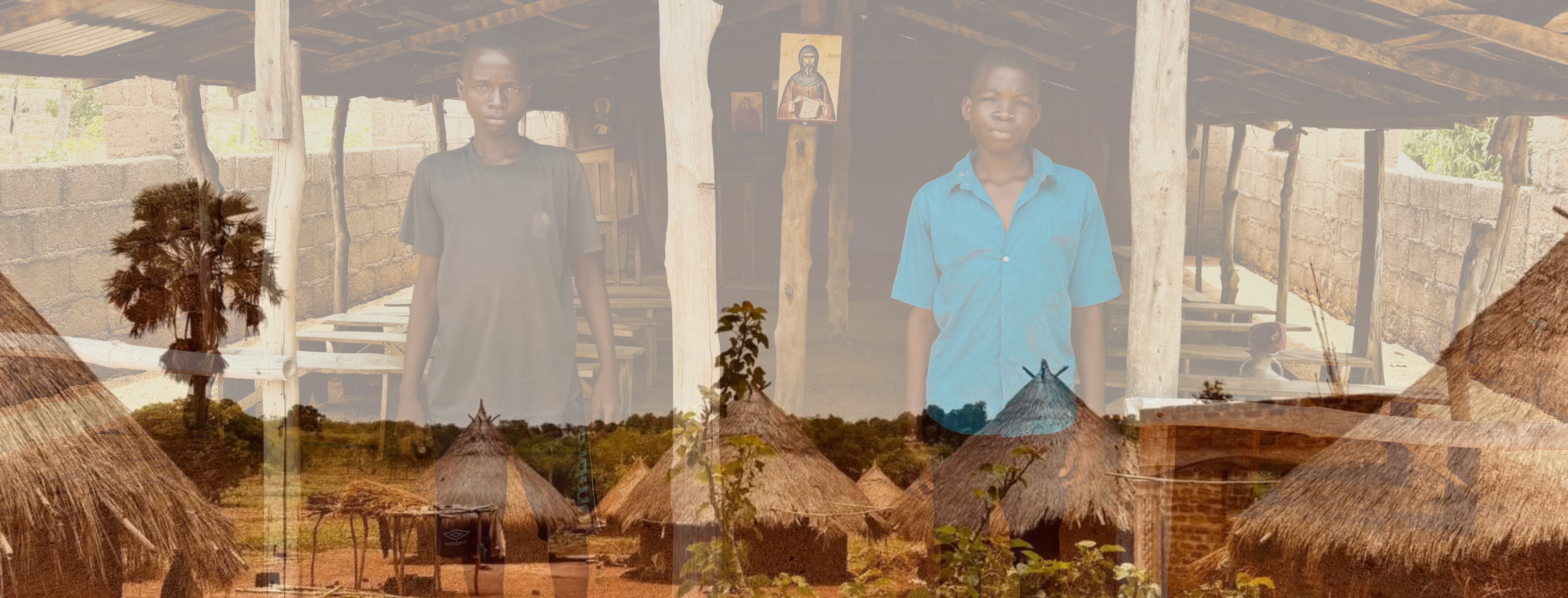
By Archbishop Nikodemus, Metropolitan of Nigeria.
Before speaking about Great Lent, we must first recall a fundamental truth: the spiritual life is not measured by outward appearance. The Gospel continually calls the human person to move beyond mere appearance and to seek true being. Great Lent is an invitation to step out of the world of impressions and return to the depth of the heart. The journey begins not from what is externally visible, but from what is inwardly transformed.
Great Lent is not simply a period of the ecclesiastical year. It is a sacred passage, a spiritual movement of the Church and of every human heart toward renewal in Christ. The Orthodox tradition does not experience it as an external obligation, but as a living journey: a path sealed by the Cross and illumined by the light of the Resurrection.
The Lord Himself reveals the character of this path:
“Whoever desires to come after Me, let him deny himself and take up his cross” (Matt. 16:24).
Lent, therefore, is not a suspension of life, but its restoration to its true direction.
The Meaning of the Way of the Cross
When we speak of the way of the Cross, we confess that Christian life matures through sacrifice, patience, and humility. The Cross is not merely a symbol of suffering, but the revelation of divine love. During Lent, the faithful are called to take up their small daily crosses: forgiveness instead of judgment, silence instead of complaint, prayer instead of distraction.
Fasting, prayer, and almsgiving are not ends in themselves. They are means by which the heart is softened so that grace may dwell within it. As the Lord reminds us, “Man shall not live by bread alone” (Matt. 4:4); the deepest hunger of the human person is communion with God.
Lent in Europe and in Africa
The one faith of the Church is lived within different historical and social realities. In many European societies, where abundance is often taken for granted, fasting becomes a conscious withdrawal from comfort and excess.
In Africa, and particularly in Nigeria, the experience is often different. Simplicity is not always a voluntary ascetic practice, but a daily way of life. Many faithful live with moderation throughout the year, whether it is Lent or not. For this reason, the spiritual emphasis cannot be confined only to dietary discipline.
Here, Lent is expressed more deeply through patience, thanksgiving amid difficulties, and humble trust in God’s providence. True fasting is revealed not only in what we set aside, but above all in how we love and remain faithful. Thus a profound evangelical truth becomes clear: blessing is not found in possession, but in dependence upon God.
The Stages of the Sacred Ascent
The Church guides the faithful step by step along this spiritual ascent.
The Salutations (Chairetismoi) to the Theotokos teach humility and the miracle of obedience. Through the “Let it be to me” of the Panagia, the human person learns to receive God into the heart.
The Akathist Hymn transforms weariness into doxology. While the body grows tired, the heart rises in thanksgiving, for repentance is not sorrow without hope, but joy born of expectation.
Holy Week leads the faithful to the very center of the mystery. The Church walks with Christ from the Mystical Supper to Gethsemane, from the silence of the Cross to the stillness of the Tomb. There it is revealed that love reaches its fullness through sacrifice.
Then dawns the night that transforms all things, the joy of the Resurrection. The Resurrection is not simply the end of Lent; it is the revelation of its meaning. “I am the Resurrection and the Life” (John 11:25). The Cross is shown to be the gateway to life.
A Theological Image
Lent resembles a seed buried in the earth. At times it struggles against comfort; at other times against hardship. Yet the mystery remains the same: the seed must descend in order to rise again. The Christian journeys toward Pascha not merely to celebrate, but to be inwardly renewed.
One Path, Many Realities
Is the preparation the same everywhere? Externally, no. Conditions, cultures, and experiences differ. Inwardly, however, the path remains one.
Whether in a European city or in a village in Nigeria, the call of Great Lent is the same: to learn humility, to deepen prayer, to be reconciled with one another, and to discover that true joy is born through the Cross.
Thus, Great Lent is not merely a season of the year, but a way of life, a cruciform journey leading every human heart to the joy of the Resurrection.
Perhaps this is the quietest revelation of Great Lent: that true transformation does not begin with what appears outwardly, but with what is purified within the heart. In places such as Nigeria, where life itself teaches simplicity and patience, this truth becomes naturally visible. The Gospel does not seek outward display, but the heart that remains open to God and to neighbor. The journey toward the Resurrection is a passage from image to reality, from fleeting appearance to deep life. Wherever humility, patience, and love take root, there already begins to shine the joy of Pascha.
And within this simplicity, faith is often expressed with serene joy and trust in God, reminding us that the Church breathes most deeply wherever life remains authentic.
Archbishop Nikodemus, Metropolitan of Nigeria